
Discernment and Gut Wisdom
Trusting Your Inner Guidance

Affirmations:
I trust my inner wisdom as it guides me toward my brightest future.
I see my life situations with clarity, making choices with full confidence and inner peace.
I release confusion and chaos, knowing that I am guided and supported every step of the way.
Emote Quotes:
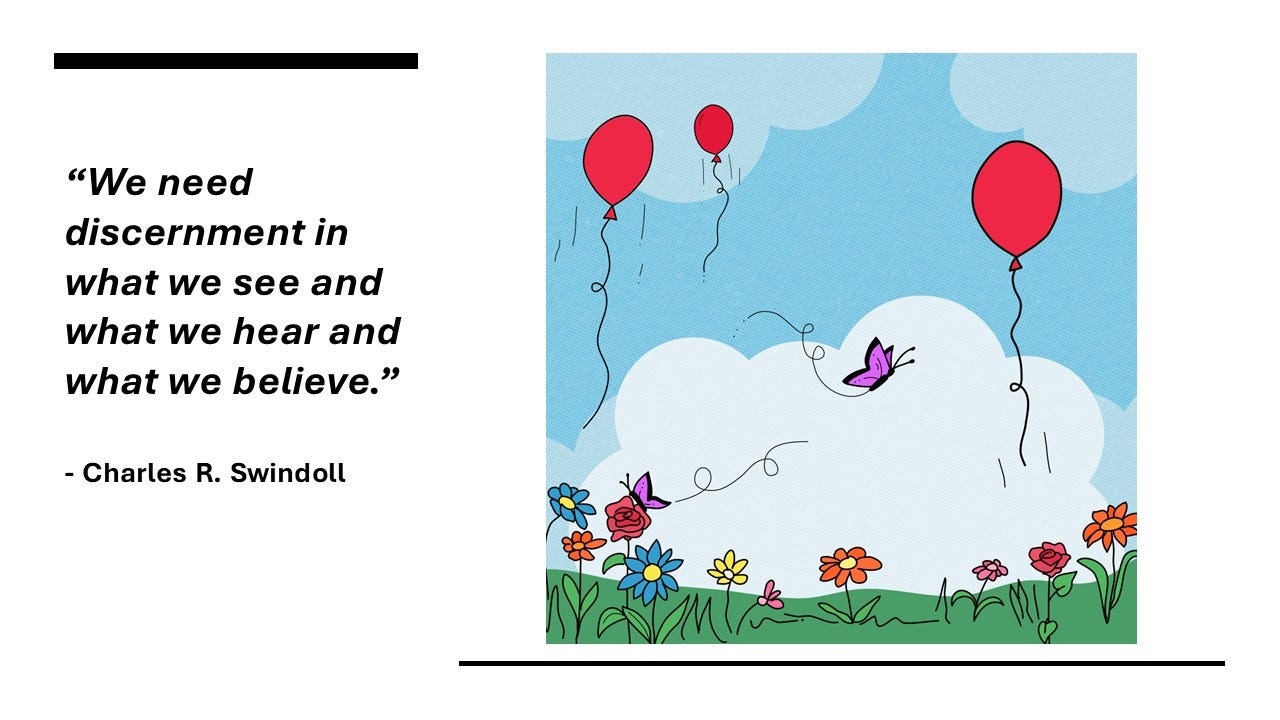
“We need discernment in what we see and what we hear and what we believe.”
- Charles R. Swindoll
“True discernment means not only distinguishing the right from the wrong; it means distinguishing the primary from the secondary, the essential from the indifferent, and the permanent from the transient. And, yes, it means distinguishing between the good and the better, and even between the better and the best.”
- Sinclair B. Ferguson
Hello everyone!
Discernment, when intentionally developed, may be one of our most valuable skills in these fast-paced and often chaotic times. Merriam-Webster describes discernment as the “power to see what is not evident to the average mind.” I like to think of it as tuning in to both our inner wisdom and our “spidey sense”—that gut feeling that often whispers to us long before our mind catches up. Whether you call it intuition or instinct, this inner guidance is deeply rooted in the gut–brain connection, a relationship that science continues to explore and validate.
Our intuition is not just a mystical notion—it’s a biological and cognitive process, shaped by rapid pattern recognition and emotional memory. The vagus nerve, a key player in this connection, helps activate the body’s “rest and digest” system, giving us a much-needed balance to the stress-driven “fight or flight” response. When we spend too much time in stress mode, our bodies and minds pay the price. Supporting a healthy parasympathetic nervous system is essential for well-being and for making clear, grounded decisions.
How Gut Feelings Communicate
Did you know your gut contains around 100 million neurons? This “second brain” processes emotional and sensory data in a flash—sometimes in as little as 200 milliseconds! When we face a decision, our brain quickly searches for familiar patterns and sends signals through the vagus nerve, resulting in sensations like warmth, tension, or butterflies. These signals are your body’s way of sharing its perspective, often before your conscious mind has a chance to weigh in.
But here’s the catch: It’s easy to swing too far in either direction—either dismissing gut feelings as irrational or impulsively following every hunch. The real magic happens in the middle, when we balance intuitive wisdom with thoughtful analysis. Learning to accurately interpret what your gut is telling you can make all the difference in your decision-making.

photo credit iStock Pavel Muravev
Three Ways to Tune In and Trust Your Gut
1. Pay Closer Attention to Body Speak
Pause before making an important decision and shift your focus inward. What sensations arise in your body? Give yourself space to notice before analyzing.
Practice guided body scans to build a stronger connection with your body’s signals. Noticing where you hold tension or feel at ease helps you trust your inner messages over time.
If tuning in feels unfamiliar, start small. Even a few minutes a day can help you strengthen your communication channels. Many of these practices also support vagal tone, which is great for your nervous system.
2. Develop Body Communication Channels
Vocal cord stimulation: Singing, humming, chanting, or even reading aloud can stimulate the vagus nerve and help you feel grounded.
Massage and positioning: Try sleeping on your right side or gently massaging the hollow of your outer ear to activate relaxation. Any gentle massage that soothes you will support your parasympathetic system.
Breathwork and cold stimulation: Practice extended outbreaths (in for 4 counts, out for 8) or try a quick cold splash on your face to reset your system.
3. Build Trust and Confidence Over Time
Validate your gut messages by reflecting on how they influence your decisions and outcomes. Over time, you’ll build confidence in your intuition.
Set aside quiet moments each day to let conscious thought settle and invite in intuitive insights. Even 15 minutes of quiet can make a big difference.
For example, if you feel a heavy sensation when meeting a potential boss or walking through a possible new home, take note. Check in with your gut again as you gather more information and reflect later on how those feelings lined up with the outcome. The more you practice, the more you’ll trust your inner guidance.
Why This Matters for Well-Being
Leading a full, busy life, with lots of outside noise too, means you’re often pulled in many directions. It’s easy to lose touch with your own needs and instincts. By learning to tune in to your gut wisdom, you can make faster, more confident decisions and avoid getting stuck in endless loops of doubt. This is one of the most valuable tools you can develop for resilience and well-being.
If you’d like support in connecting more deeply with your intuition and decision-making process, consider a paid subscription or explore my coaching sessions designed to help you find clarity, confidence, and renewed energy in your work and life. You don’t have to navigate these challenges alone—gentle, personalized support is available.
Check out my latest meditation on YouTube for clearing your space.
Energy Cleanse with Sage and Light
Thank you—until next time….
Barbara.